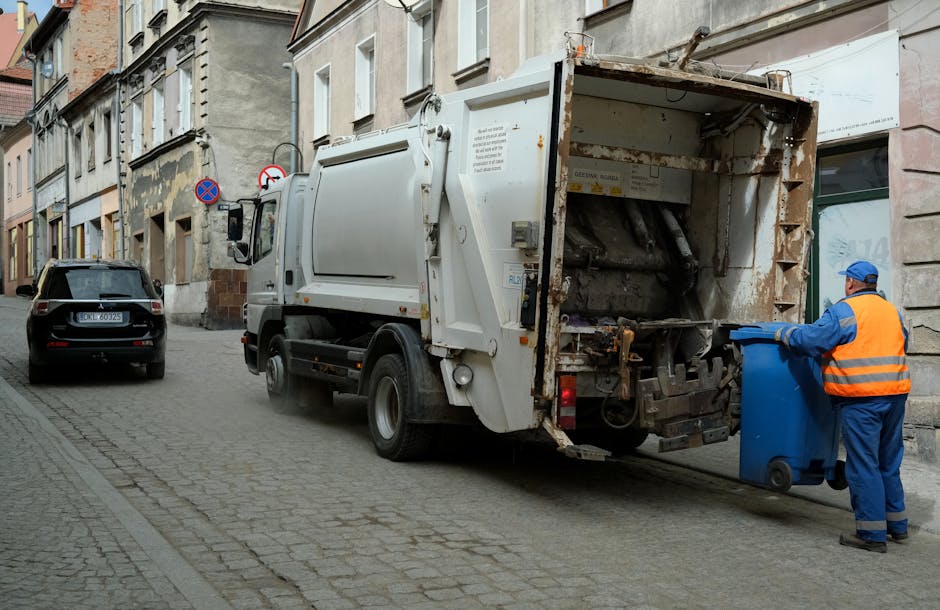
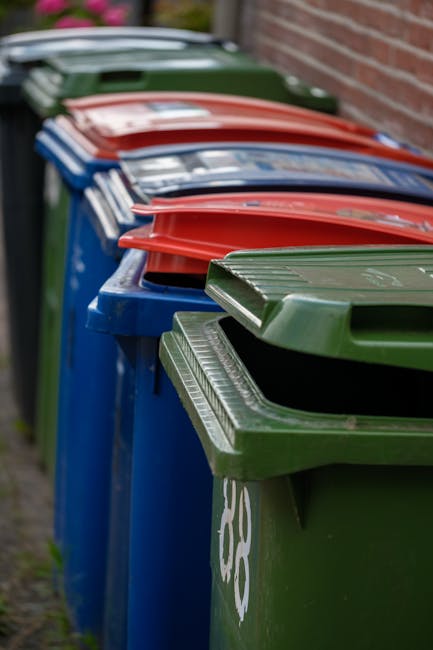
Bexley Council bins vs private rubbish services in Sidcup: what to choose, when, and why
If you live or work in Sidcup, waste collection can feel simple right up until it isn't. A bin gets missed, a shed gets cleared, a landlord wants a quick turnaround, or you suddenly have far more rubbish than the regular weekly collection will take. That is where the comparison between Bexley Council bins vs private rubbish services in Sidcup becomes genuinely useful. One route is built around scheduled household service; the other is built around speed, flexibility, and heavier or awkward waste. The right choice depends on what you are dealing with, how quickly it needs to go, and how much control you want over the process.
In this guide, we will break down how both options work, where each one makes sense, what to watch out for, and how to make a decision without wasting time or money. No fluff, no vague advice. Just the practical stuff that helps when a pile of rubbish is starting to look a bit more serious than it did yesterday.
As a side note, rubbish has a funny way of multiplying when you are not looking. One broken wardrobe, two black sacks, and suddenly the hallway feels smaller. Truth be told, that is usually when people start comparing council collection and private clearance.
Table of Contents
- Why Bexley Council bins vs private rubbish services in Sidcup Matters
- How Bexley Council bins vs private rubbish services in Sidcup Works
- Key Benefits and Practical Advantages
- Who This Is For and When It Makes Sense
- Step-by-Step Guidance
- Expert Tips for Better Results
- Common Mistakes to Avoid
- Tools, Resources and Recommendations
- Law, Compliance, Standards, or Best Practice
- Options, Methods, or Comparison Table
- Case Study or Real-World Example
- Practical Checklist
- Conclusion
- Frequently Asked Questions
Why Bexley Council bins vs private rubbish services in Sidcup Matters
This choice matters because waste is one of those everyday issues that can quietly cause bigger problems if it is handled badly. Missed bins can lead to odours, pests, complaints from neighbours, or simply an increasingly stressful home or business environment. On the other hand, choosing private rubbish services when council collections would have done the job can mean unnecessary cost.
For many Sidcup residents, the real question is not "which is best?" but "which is best for this situation?" A regular household bin is ideal for normal weekly waste. A private clearance service becomes more useful when the job is too large, too urgent, too awkward, or too specific for standard collections. Think of it as choosing between a fixed routine and a flexible response.
The decision also affects convenience. Council bins usually follow local collection schedules and rules. Private rubbish services can often work around your timing, access needs, and type of waste. If you have ever stood outside with an overflowing pile of flat-pack packaging and a broken chest of drawers, you will know why that flexibility matters.
There is another angle too: compliance and responsibility. Waste needs to be handled properly, especially if it includes bulky items, mixed materials, or anything that might fall into controlled categories. A poor choice can create avoidable hassle. A good one saves time, keeps the property tidy, and gives you peace of mind.
If you are also comparing wider local services, it can help to understand the broader area support available. For example, our local waste removal service overview explains how fast collections are usually arranged, while the page on areas we cover shows the neighbourhoods and routes where demand often rises around move-out dates and refurb jobs.
How Bexley Council bins vs private rubbish services in Sidcup Works
The two systems operate in very different ways, and that is the heart of the comparison.
Council bin collections
Bexley Council bin services are generally designed for routine household waste, recycling, garden waste where applicable, and other standard domestic disposal streams. The model is straightforward: you put the right materials in the right container, present it on the scheduled day, and the collection team empties it if it meets the service rules.
That sounds simple because, mostly, it is. But there are catches. Bin lids need to close. Contamination can cause problems. Extra rubbish beside the bin may not be collected. Missed collection issues can also happen because of access, weather, contamination, or operational changes. So while the system works well for normal household use, it is not built for one-off bulk clearance or time-sensitive jobs.
Private rubbish services
Private rubbish services in Sidcup tend to focus on speed, convenience, and more varied waste types. A team can often collect from inside or outside a property, take bulky items, load everything for you, and clear a space in one visit. For many customers, that is the main appeal. No waiting for the next scheduled collection, no wheeling a heavy item to the kerb, no trying to squeeze one more bag into a bin that is already protesting.
Private services are especially useful for:
- house clearances
- garage, loft, and shed clearances
- bulky household items
- post-renovation waste
- landlord and tenant voids
- business rubbish that needs fast removal
A good provider should explain what it can take, how loading works, and whether any items need special handling. If you want a practical look at household-scale clearance, our domestic waste removal page is a useful place to start. For larger clear-outs, the house clearance service page gives a clearer picture of what happens on the day.
The key operational difference
With council bins, you work within the service. With private rubbish services, the service works around you. That one sentence explains most of the comparison, to be fair.
Key Benefits and Practical Advantages
Each option has real strengths. The mistake people make is assuming one should replace the other. Usually, they complement different needs.
Benefits of council bins
- Predictable routine: A regular collection schedule fits everyday life.
- Low direct cost: For standard household waste, the service is usually more economical than booking private clearance.
- Simple for normal use: If you sort waste correctly, it is a low-effort system.
- Good for ongoing waste: Homes with steady, manageable rubbish production often do fine with council bins alone.
Benefits of private rubbish services
- Speed: Collections can often be arranged quickly.
- Flexibility: You can usually book around your schedule, not the other way round.
- Labour included: The team loads the waste, which matters if items are heavy or awkward.
- Bulk capacity: Better for clearances, renovation debris, and mixed rubbish.
- Reduced disruption: Useful when you want the space cleared in one go.
There is also a hidden benefit people do not always consider: mental relief. An overflowing side return or a garage packed with broken furniture can nag at you every time you walk past. Once it is gone, the house feels lighter. Sounds obvious, but it really does change how a space feels.
If you are comparing options for a property you manage, or a business unit that needs tidy turnover, our commercial waste removal service page may help you judge whether a one-off collection is enough or whether you need a repeat arrangement.
Who This Is For and When It Makes Sense
This comparison is relevant to a wide range of people in Sidcup, not just homeowners with too many bin bags. In practice, the choice tends to depend on the size of the job and the clock.
You may be best served by council bins if you are:
- disposing of normal household waste
- managing regular recycling and food waste
- not in a rush
- comfortable following local bin rules
- dealing with waste that fits neatly into the weekly cycle
Private rubbish services make more sense if you are:
- moving home or helping someone move
- clearing a rental property between tenancies
- renovating a kitchen, bathroom, or office
- dealing with a build-up after a long period of clutter
- unable to lift or move bulky items yourself
- working to a deadline, such as sale, inspection, or handover
Let's face it, a lot of rubbish problems happen at inconvenient times. A tenant gives notice. The loft stairs are awkward. The weather turns miserable. Or you discover half a garden's worth of old timber and black bags on a Saturday morning. That is when a flexible collection starts to look less like a luxury and more like a practical fix.
If you are unsure whether your job is "normal bin waste" or "needs a clearance team", a quick rule of thumb helps: if it would be difficult to move, sort, or present neatly in a standard bin, private collection is usually the smoother path.
Step-by-Step Guidance
Here is a simple way to decide between the two options without overthinking it.
1. Identify the type of waste
Start by sorting what you actually have. Is it general household rubbish, mixed bulky waste, green waste, old furniture, or renovation debris? Some of that may fit a bin schedule. Some of it plainly will not.
2. Check whether it fits the council route
If the waste is ordinary and can be separated into the right bins, the council route is usually the first thing to consider. That is especially true for everyday rubbish and recyclables. If you are already keeping waste well organised, there is no reason to skip that step.
3. Think about timing
Ask yourself how quickly it needs to go. If the answer is "not until next collection", council bins may be enough. If the answer is "today, ideally before lunch", private rubbish services are the more realistic option. Timing changes the whole decision.
4. Consider volume and access
A single bin bag is very different from a full shed clearance. So is a ground-floor front drive compared with a top-floor flat. Private services are often chosen because they manage access and loading for you, not because the waste itself is unusual.
5. Compare total effort, not just price
On paper, council disposal may look cheaper. And often it is. But if you need a van, time off work, lifting help, or multiple trips to a facility, the true effort can be much higher. Private rubbish services turn that hidden effort into a one-off booked job.
6. Book or present waste correctly
Whichever route you choose, make it easy for the collector. Keep recycling clean, bag mixed waste sensibly, and separate anything that needs special handling. If you are using private clearance, describe the waste accurately. Surprises are bad for everyone, especially on a narrow driveway with a low fence and nowhere to swing a dustbin, which is more common than people like to admit.
Expert Tips for Better Results
A few practical habits make a surprising difference.
- Sort first, then book: A quick pre-sort saves money and stress.
- Measure bulky items: Even rough dimensions help you understand how much space they take.
- Photograph the pile: If you are getting quotes, a clear photo often gives a much better estimate than a vague description.
- Separate hazardous items early: Batteries, chemicals, paints, and similar materials need extra care.
- Keep access clear: A clear path speeds up collection and lowers the chance of delays.
- Ask what is included: Loading, lifting, and disposal should all be clear before booking.
One small but useful tip: if you are clearing a home room by room, start with the items that create the biggest visual clutter. Once those are gone, the whole job feels more manageable. Funny how that works. A room can go from chaotic to workable after just a few bulky items disappear.
If you need a collection for a same-day or next-day situation, our same day waste removal information can help you understand how urgent collections are typically handled. For larger items, the bulky waste collection page is also relevant.
Common Mistakes to Avoid
Most waste issues are not dramatic. They are just messy little mistakes that pile up.
Assuming the council will take everything
Council bins are not designed for all waste types. If you leave unsuitable items beside the bin or assume bulky waste will be accepted automatically, you may be disappointed.
Overfilling bins
A bin with the lid forced open is more likely to cause problems. It can also attract contamination, spillage, and complaints from neighbours. Small habit, big annoyance.
Not checking what the private service will collect
Private rubbish services vary. Some handle mixed loads easily. Others have restrictions on certain materials. Always confirm the exact waste type before booking.
Booking too late
If you are on a deadline, waiting until the last minute is risky. That is true for tenant moves, office clear-outs, and end-of-renovation jobs. A Friday afternoon emergency is rarely as calm as people hope it will be.
Mixing hazardous and general waste
This is a common one. Paint, solvents, gas canisters, sharp metal, and batteries should be separated and handled with care. If in doubt, ask before they are loaded together.
Choosing only by headline price
The cheapest quote is not always the best value if it excludes loading, adds call-out constraints, or cannot collect when you need them to. A slightly higher price can save a lot of friction.
Tools, Resources and Recommendations
You do not need fancy equipment to make a good decision, but a few simple tools help.
- Phone camera: Take photos of the waste from more than one angle.
- Notepad or notes app: List item types, access issues, and timing constraints.
- Tape measure: Handy for sofas, wardrobes, appliances, and piles of timber.
- Bin and sorting area: A small staging space near the exit can speed things up.
For readers handling a bigger move, the end of tenancy clearance service page is especially relevant. It is often the point where people realise that ordinary bins will not quite cut it. For homeowners, the garage clearance page can be useful too, because garages have a habit of collecting items nobody quite remembers buying.
Recommended approach: if your waste is regular, keep using the council system properly. If it is bulky, urgent, or simply too much for the normal routine, get a private quote and compare effort as well as price. Simple, but effective.
Law, Compliance, Standards, or Best Practice
Waste disposal is one of those everyday tasks where common sense matters, but so does proper handling. In the UK, household waste, commercial waste, and certain item types are treated differently in practice, so it is sensible to be careful about what goes where.
Best practice usually means:
- separating recyclable, general, and special waste where possible
- avoiding contamination of recycling streams
- not leaving waste where it blocks pavements, access routes, or shared spaces
- using a reputable collection service that explains what it accepts
- keeping an eye on items that may need specialist handling, such as electricals or potentially hazardous materials
If you are using a private rubbish service, it is wise to ask how waste is processed and whether the provider can handle mixed loads responsibly. Clear communication is not just polite, it prevents mistakes. In the real world, that matters more than people think.
For businesses, the stakes are higher because waste responsibilities can differ from household disposal. If you run a shop, office, rental portfolio, or trade operation in Sidcup, a private service may be the practical answer, but it should still be chosen with compliance and documentation in mind. The goal is simple: clear the waste properly and avoid creating a bigger problem later.
Options, Methods, or Comparison Table
Here is a straightforward comparison to help you weigh the choice without getting lost in details.
| Factor | Bexley Council bins | Private rubbish services in Sidcup |
|---|---|---|
| Best for | Routine household waste and recycling | Bulky, urgent, mixed, or large-volume waste |
| Speed | Set by collection schedule | Often fast and flexible |
| Effort from you | You usually prepare and present the bins | The team often loads and removes waste for you |
| Cost | Usually lower for normal domestic use | Higher than council bins, but includes convenience |
| Waste type flexibility | Limited by collection rules | Usually broader, depending on provider |
| Ideal scenario | Weekly or routine disposal | Clear-outs, bulky items, move-outs, urgent jobs |
Expert summary: choose council bins for everyday waste that fits the system, and choose private rubbish services when time, volume, lifting, or access become the real issue. That is the cleanest way to think about it.
Case Study or Real-World Example
Picture a typical Sidcup household in the middle of a bathroom refresh. There are broken tiles, packaging, an old sink unit, a scrap of timber, and a few bags of general rubbish. The normal bin service will help with some of that, but not all of it, and not quickly.
In that sort of situation, people often start by trying to "make it fit" the weekly collection. A bag here, a box there. Then they realise the bulky pieces still need moving, and the hallway is becoming a storage area. By the time the new bathroom fitter is due, the waste has become the thing everyone is stepping around.
A private rubbish service changes the pace. Instead of making multiple trips or waiting for the next slot, the waste is removed in one visit. The room is clear, the dust sheet can come up, and the job gets back on track. Small win, but a satisfying one.
I remember a similar kind of clear-out where the biggest relief was not even the empty space. It was hearing the back gate shut after the last load went out. Quiet again. That matters more than you might expect.
Practical Checklist
Use this quick checklist before you decide between Bexley Council bins and a private service in Sidcup.
- Have I identified the waste type clearly?
- Does it fit the normal council bin system?
- Is there a deadline or urgent deadline?
- Do I have bulky items that need lifting?
- Is access awkward, narrow, or upstairs?
- Would I need to hire a vehicle or make several trips myself?
- Are any items hazardous or special-handling?
- Have I checked whether the provider can take everything in one go?
- Have I compared total effort, not just headline price?
- Do I need a fast, tidy result rather than a routine collection?
If you can answer "yes" to several of the middle questions, a private rubbish service is probably the smoother option. If not, your council bins may be enough for now. No drama. Just the right tool for the job.
Conclusion
The decision between council bins and private rubbish services in Sidcup is not really about which is better in the abstract. It is about which one fits the reality in front of you. Council bins are ideal for predictable, everyday waste. Private rubbish services are better when the waste is bulky, urgent, awkward, or too much for normal collections.
In practical terms, the best choice is the one that saves you time, avoids stress, and keeps waste moving in a proper, responsible way. If you are dealing with a one-off pile, a property clear-out, or a job that needs doing soon rather than eventually, private help often pays for itself in convenience alone. If your waste is routine and manageable, the council system remains the steady, sensible option.
Get a free quote today and see how much you can save.
And if you are still weighing it up, that is completely normal. Most people are not choosing between two perfect options; they are just trying to clear space and get on with life. That is fair enough. Sometimes the best solution is simply the one that makes tomorrow feel lighter.
Frequently Asked Questions
What is the main difference between Bexley Council bins and private rubbish services in Sidcup?
The main difference is flexibility. Council bins are designed for routine, scheduled household waste, while private rubbish services are built for faster, larger, or more awkward clearances.
Are private rubbish services always more expensive than council bins?
Usually yes for routine waste, because they include collection, loading, and flexibility. But for bulky jobs or urgent clearances, the extra cost can be worth it because it saves time and effort.
Can I use council bins for bulky items?
Not usually in the way people hope. Standard bins are meant for everyday waste, not furniture, large appliances, or mixed clearance loads. Bulky items often need a separate solution.
When should I choose a private rubbish service instead of waiting for council collection?
Choose private collection when the waste is urgent, too large, too heavy, or too awkward to fit the normal bin system. It is also helpful if you need the space cleared quickly for a move, repair, or inspection.
Do private rubbish services take mixed household waste?
Many do, but you should always check first. Mixed waste can include general rubbish, furniture, packaging, and other non-hazardous items, but restrictions may still apply.
What if I only have a small amount of rubbish?
If it is small and routine, council bins are usually the first choice. If you need same-day removal or cannot dispose of it yourself, a private service may still be useful.
Is it okay to leave extra bags beside the bin?
That depends on local collection rules, but in many cases extra bags will not be taken automatically. It is safer to avoid overfilling and instead sort waste properly or arrange a separate collection.
Can private rubbish services help with end-of-tenancy clear-outs?
Yes, that is one of the most common reasons people use them. They are useful when a property needs to be emptied quickly and left tidy for inspection or handover.
What should I do with hazardous items?
Hazardous items should be handled separately and with care. Ask the provider in advance what they can accept, because paints, chemicals, batteries, and similar materials may need special arrangements.
How do I know if I am getting a fair quote?
Look at what is included, not just the headline price. Ask whether loading, disposal, and access are covered, and make sure the waste description matches the actual job.
Do I need to sort my waste before a private collection?
Sorting helps, but not every service requires perfect separation. It is best to separate anything obvious, such as recyclables, special waste, and bulky items, because that makes the collection faster and cleaner.
What is the simplest way to decide between the two options?
If the waste is normal, routine, and fits the bin system, council collection is usually fine. If it is urgent, bulky, or messy, a private rubbish service is often the easier path.