Office Clearance in Sidcup

Office clearance in Sidcup should be organised around the practical details that matter to a business: what needs removing, how access works, and which items must be handled separately. We provide a structured clearance service for offices, workspaces and commercial rooms where furniture, paperwork, equipment and mixed contents need to be taken away in a controlled way. The aim is to leave the space ready for its next use without creating unnecessary disruption.
Our service can cover individual rooms, whole floors or a phased clearance where items are removed in stages. That can include desks, chairs, storage units, filing cabinets, meeting furniture and other general contents associated with day-to-day office use. Where a workplace is being reorganised, downsized or closed, the service can be planned around the order that suits the site rather than forcing everything into one untidy removal.
For a straightforward start, it helps to separate what stays from what goes and note anything that needs particular handling. You can then request a quotation with a clearer outline of the work. If you are comparing options, pricing and quotes is a useful place to look at how the process is approached, while the clearance itself remains tailored to the items and access at your premises. Please use the details below to decide what level of support you need.
Office furniture and workstation clearance
Office furniture clearance is often the core of a workplace job, especially when a business is updating its layout rather than emptying every room at once. We handle common furniture types such as desks, task chairs, conference tables, pedestals, cupboards, shelving and reception pieces. Items can be removed from occupied or vacant premises, provided the arrangement of the site is clear and safe access is available. That makes it easier to clear out surplus pieces without leaving a jumble of scattered parts behind.
Where furniture is still usable, some customers want a clearance that keeps the job organised so items can be assessed before removal. Others simply need bulky pieces taken away efficiently and responsibly. We can work through the space in a sensible order, which is especially helpful in offices with narrow corridors, shared entrances or lift access. When a room contains mixed items, the service is usually planned so that large furniture, loose contents and smaller accessories are not treated as one undifferentiated load.
Practical points when planning the work
Before the clearance begins, it is useful to identify any furniture that should remain in place, along with items that need to be dismantled or moved through tight access routes. Photographing a room can help, but a written list of the larger items is often enough to start a quotation. If there are shelves, partitions or fixed fittings involved, say so early, because not every item in an office can be removed in the same way. That saves time and makes the plan more accurate.
Equipment, filing and general office contents

Many office clearances involve more than furniture. Filing systems, archived paperwork, desk accessories, display items, small appliances and general contents can build up over time and need sorting before removal. We can clear mixed office contents in a controlled way so the main workspace is not left cluttered during the process. The work is often best handled in stages, especially where one area is still in use while another is being emptied.
Items such as monitors, printers, telephones, cabinets and storage boxes may all need separate attention because they are not all handled in the same way on site. Some customers want the workplace stripped back to a bare shell; others only need surplus items removed as part of a refurbishment or move. A good clearance plan keeps those differences clear, so the service matches the actual contents rather than a generic idea of an office.
Where an enquiry involves mixed contents, it is sensible to describe the main categories rather than attempting to itemise every single piece. That is usually enough to shape a practical quotation. If you are ready to move ahead, contact us to talk through the job and request a quote. The more specific the information about access, item types and timing, the easier it is to prepare the right approach.
Workplace clearance for moves, refurbishments and closures
Office clearance needs vary depending on why the work is happening. A relocation may involve removing redundant furniture and contents while leaving some items for the new site. A refurbishment may need one area cleared first so contractors can work without obstruction. A closure usually requires a fuller clearance, with a stronger focus on leaving the premises empty and ready for handover. We adapt the service to the situation instead of forcing the same pattern on every job.
Commercial spaces can contain both shared and department-specific items, so it is helpful to decide which teams or rooms are included in the clearance. That can prevent confusion over archived files, specialist equipment or furniture allocated to another part of the business. Where work is being phased, the sequence matters as much as the final result. The job is usually smoother when the clearance follows the order that the site is already using for moving out or reorganising.
If you are comparing service pages, business waste removal may be relevant where the task includes ongoing commercial waste alongside a one-off clearance. In other cases, the better fit is a focused removal of the office contents themselves. Either way, the important thing is that the scope is defined clearly so the quotation reflects the actual work and not a guess about what the premises may contain.
Furniture disposal and responsible handling

Furniture disposal for offices is rarely just about moving items out of the room. Larger desks, cupboards and seating may need to be dismantled, lifted safely or separated from other materials before removal. We handle office furniture disposal as part of the clearance service, which is useful where a site has mixed stock that is no longer needed. That helps keep the process organised and reduces the chance of items being left behind because they were awkward to move.
Some furniture is purely functional office stock, while other pieces may be part of a reception area, meeting suite or storage system. Each type presents different practical issues, from access and weight to the space needed for removal. When the load includes a mix of standard items and more cumbersome pieces, planning the disposal carefully makes the job more efficient. It also helps avoid unnecessary handling, which matters in busy premises where corridors and shared areas need to remain usable.
Useful items to mention in a quotation request include the number of rooms, any lift or stair access, the presence of heavy cabinets, and whether dismantling is likely to be needed. Those details do not have to be perfect, but they make the estimate more reliable. If the job also involves household-style contents from an office flat or ancillary space, you may find flat clearance relevant as a separate service page for that type of property.
Special items, restricted access and careful sorting
Not every office clearance is a simple matter of moving standard desks and chairs. Some jobs include awkward access, awkwardly sized items or spaces where sorting must be done carefully to avoid disturbing what remains in use. Narrow stairs, shared corridors, basement rooms and split-level buildings can all affect the way the work is organised. A thoughtful clearance plan takes those site conditions into account before the first item is removed.
Where an office contains items that need a little more consideration, the job benefits from a clear sequence. Heavier or larger items may need to be removed first, while lighter contents are grouped separately so they can be handled efficiently. This is especially helpful where the office is still partly occupied, because it reduces disruption and keeps the route through the premises more predictable. The aim is a steady, manageable clearance rather than a rushed sweep through the building.
It can also be useful to say whether the clearance includes only office contents or whether other storage areas are part of the same project. For example, a storage room, garage-like annex or back office may contain older items that need different handling. Where that applies, garage clearance may be helpful as a related page for understanding how separate storage spaces are approached within a wider removal job.
How the quotation is normally shaped
Quotation requests for office clearance are usually based on the type and amount of contents, the layout of the site and the ease of access. A room full of light furniture is not the same as a workspace with heavy storage, packed filing and equipment that needs moving through stairs or narrow passages. We look at the practical factors that affect the work so the price reflects the actual clearance rather than a broad assumption about office size.
One of the most helpful things a customer can provide is a simple summary of the areas involved and the main item categories. If photographs are available, they can help, but they are not a substitute for a clear description of the work. Likewise, if there are deadlines linked to a move-out or refurbishment, mention them at the start so the clearance can be planned around the site’s own schedule. That keeps the process orderly and avoids unnecessary back-and-forth.
For businesses that are comparing internal options, it is often sensible to separate the office clearance from other property clearances. A premises with a workplace on one floor and a domestic-style room elsewhere may need different approaches for each area. In those circumstances, a broader service such as home clearance can help indicate how mixed contents are handled where the property is not a standard office environment.
About Sidcup
Sidcup lies in south-east London and is now part of the London Borough of Bexley, having once developed as a Kent village before suburban growth transformed it in the late nineteenth and twentieth centuries. The area sits on higher ground than much of the surrounding district, with the North Cray and Chislehurst boundaries helping to frame a landscape that combines residential streets, shopping parades and stretches of green space. Sidcup High Street remains an important local focus, while the rail connection has long shaped movement into central London and towards the wider Thames corridor. Historic building stock survives alongside later housing estates, giving the area a varied streetscape rather than a single uniform character. Footpaths, parks and smaller open spaces contribute to its more settled atmosphere, and the district is also known for its links with education and performance training through the legacy of Rose Bruford College. Nearby heritage sites, including Lamorbey Park and its associated landscape features, add to the local pattern of civic and domestic architecture, while the wider borough context places Sidcup within a network of suburban centres, routes and community spaces that evolved over a long period of expansion.
Other office clearance choices

Some customers need more than one kind of removal page to understand the available options. If the office job includes stored items from an attic space or upper-level archive area, loft clearance can be a useful reference point for access-heavy spaces. Where the contents are mainly old fixtures, surplus furniture or a mix of unused items, the principle remains the same: identify the work clearly and choose the service that best matches the actual site conditions.
We also deal with clearance work that overlaps with general waste removal, especially where an office contains a combination of recyclable materials, bulky items and assorted unwanted contents. That sort of job benefits from a practical plan so the right items are removed in the right order. It is usually better to define the scope carefully at the outset than to treat everything as a single indistinct pile, because office clearances often include items with different handling needs.
If the premises contain an entire room of surplus contents, a more comprehensive page such as office clearance may still be the most relevant route for the main job, particularly where a business wants to strip back a working area without changing the wider property. A concise description of the rooms involved will usually help us identify the best approach and prepare a quotation that suits the real workload.
Preparing access and booking the work
A smooth office clearance usually depends on access being organised sensibly rather than on any complicated preparation. Make sure the route to the rooms is clear, tell us about parking or loading restrictions, and identify anything that should be left untouched. If the premises are shared, it also helps to note any building rules or time windows that affect when the work can take place. Those practical details can be enough to avoid delays on the day.
You do not need to over-prepare the room, but a little organisation goes a long way. Separating keep items from clearance items, unlocking all relevant areas and noting any particularly heavy pieces gives the team a clearer starting point. When the job is part of a bigger move or refurbishment, linking the clearance to the wider schedule makes the process easier to coordinate. That is especially true where the office is still being used while some areas are already being emptied.
For a quotation, the best approach is to describe the site, the main items and any unusual access features in plain language. Then you can ask for a clear written estimate and decide whether the service matches your plans. If the work also includes other forms of removal, waste removal is a useful additional page for understanding the broader service range available.
Choosing the right clearance scope
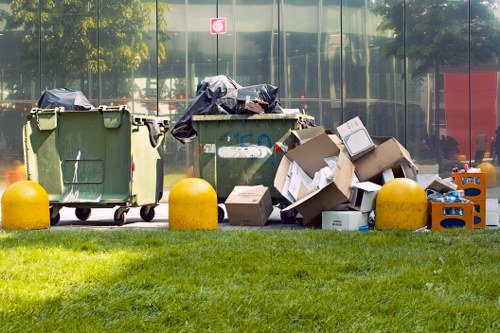
Choosing the right scope is important because office clearances are not all the same. A small team room may only need a few items taken away, while a larger workplace could involve several interconnected spaces, archive areas and storage cupboards. We can help with either end of that range, provided the job is described clearly. The key question is not simply how much there is, but how the contents are arranged and what needs to remain in place.
Some customers want to retain certain items for reuse, redistribution or later disposal. Others want the premises cleared right back to an empty state. Both approaches are workable, but they lead to different planning choices. If any items are sensitive, fragile or especially awkward to move, say so early. A good office clearance is one where the remaining space is left in a usable condition and the removed contents have been handled according to the agreed scope.
Request a quotation today if you want to compare the practical options for your office clearance in Sidcup. Tell us what needs removing, how the site is accessed and whether the job is a partial clearance, a full emptying or something in between. We will use those details to shape the work clearly and keep the next step simple.