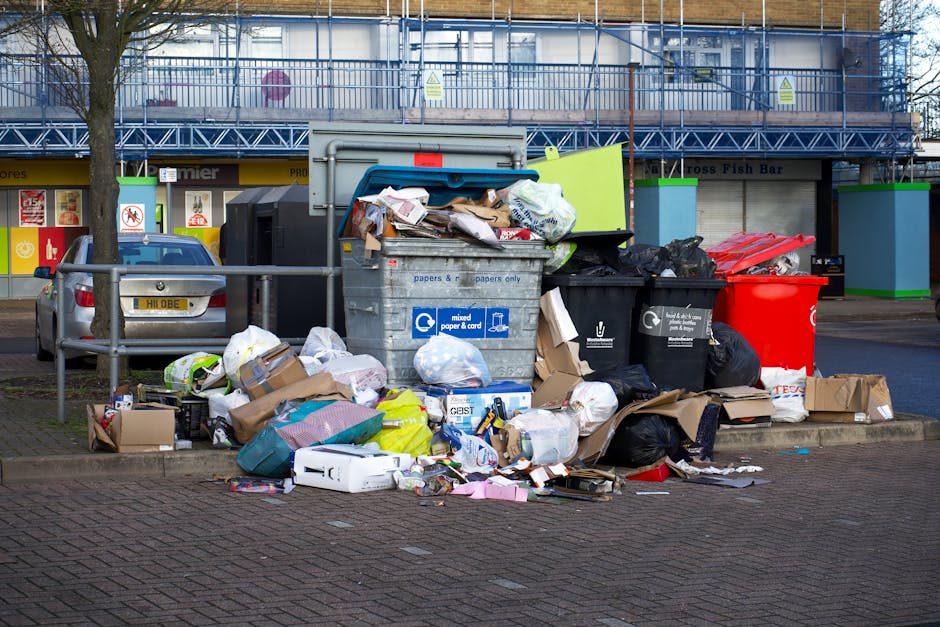
Sidcup eco rubbish disposal: low-impact removal options
If you are trying to clear rubbish in Sidcup without creating more mess, more emissions, or more hassle, you are not alone. Plenty of people want a tidy home, a cleared garage, or an emptied office, but they also want to keep the job low-impact and sensible. That is exactly what Sidcup eco rubbish disposal: low-impact removal options is about: making the right clearance choices, reducing waste where possible, and sending only the unavoidable remainder on the most responsible route.
Done well, eco-friendly disposal is not complicated. It is mostly about planning, sorting, re-use, recycling, and choosing a removal method that fits the load rather than overdoing it. In this guide, you will find practical low-impact options, common mistakes to avoid, and a simple step-by-step approach that helps you clear space with a lighter footprint. Truth be told, a little thought at the start saves a lot of regret later.
Contents
- Why low-impact rubbish disposal matters in Sidcup
- How eco rubbish disposal works
- Key benefits and practical advantages
- Who this is for and when it makes sense
- Step-by-step guidance
- Expert tips for better results
- Common mistakes to avoid
- Tools, resources and recommendations
- Law, compliance, standards and best practice
- Options, methods and comparison table
- Case study or real-world example
- Practical checklist
- Conclusion
- Frequently asked questions
Why Sidcup eco rubbish disposal: low-impact removal options Matters
Sidcup has the same everyday waste challenges as many busy London areas: moving house, replacing furniture, clearing out a loft that has become a museum of half-forgotten things, or shifting builders' debris after a refurb. The problem is that a quick fix is not always the cleanest fix. A van load of mixed junk can easily become a missed opportunity for reuse and recycling if it is thrown together with no sorting.
Low-impact removal matters because rubbish is rarely just rubbish. Old chairs may still be usable. Broken shelving can often be dismantled and separated. Garden waste can be compostable or recyclable depending on what it is mixed with. Even builder's waste can sometimes be handled in a more thoughtful way if it is sorted early rather than tipped into one pile and dealt with later. That small difference matters more than people think.
There is also a practical angle. Cleaner sorting often means faster loading, fewer trips, and less waste going through the wrong route. That can make the whole process smoother for the customer and, frankly, less stressful all round. Nobody wants to spend a Saturday morning standing in a hallway wondering why there are three different piles of screws in three different boxes. Been there? Many have.
In a place like Sidcup, where homes, flats, gardens and small businesses all create different types of waste, eco rubbish disposal is really about matching the removal method to the material. It is not about being perfect. It is about being better. And that is a useful standard to work from.
Expert summary: The lowest-impact clearance is usually the one that starts with sorting, prioritises reuse, avoids unnecessary transport, and sends recyclable material into the correct stream rather than treating everything as mixed waste.
How Sidcup eco rubbish disposal: low-impact removal options Works
At its simplest, eco rubbish disposal works by reducing the amount of material that needs final disposal. That happens in stages: first reuse, then recycling, then responsible disposal for whatever is left. The key is not to leave all of that decision-making until the end. Once items are mixed together, the options narrow quickly.
A good low-impact removal process usually starts with a survey of what needs to go. Are there furniture items in decent condition? Is there metal, wood, cardboard, green waste, electricals, plasterboard, or general household waste? Each type has different handling needs. In practice, separating even a few common categories can make the clearance noticeably more sustainable.
For example, during a house clearance, one room may contain reusable furniture, another may have mixed paper and boxes, and the loft may be full of items that need careful sorting. A methodical approach helps prevent good items from ending up in the same load as damaged waste. Similarly, a office clearance can often benefit from separating desks, chairs, electronics, confidential paper waste, and packaging before anything leaves the premises.
Removal teams that focus on sustainability will also think about loading efficiency. It sounds small, but packing a van properly means fewer trips and less fuel used. Less fuel, less fuss. Nice and simple. They may also look at donation potential, especially for furniture and fittings that are still functional. When that is done properly, it can turn a clearance from a straight disposal job into a more circular process.
The "low-impact" part is not only about recycling. It is also about avoiding wasteful overcollection, reducing contamination, and using the right clearance size for the job. If you only have a few bulky items, you do not need to create a huge collection operation. If you have a full property or a large office, then a more structured clearance is often the cleaner option.
What happens to the waste?
In a sensible eco-focused clearance, the waste is usually split into usable, recyclable, and residual material. Usable items may be earmarked for reuse. Recyclable materials are kept separate where possible. Residual waste is disposed of through the appropriate route. That order matters, because once different materials are contaminated together, recovery becomes more limited.
It helps to think of the process as a funnel. The first question is always, "Can this be used again?" The next is, "Can it be recycled?" Only after those questions should the final disposal question be asked. That simple mental habit makes a surprising difference.
Key Benefits and Practical Advantages
Low-impact rubbish disposal is not just a nice environmental idea. It brings real, everyday advantages that people notice quickly.
- Less waste to landfill or final disposal because more material is reused or recycled.
- Cleaner and tidier clearances thanks to better sorting and fewer mixed loads.
- Better use of space when clutter is removed in an organised way.
- Lower transport impact when waste is collected efficiently in one properly planned trip.
- Better outcome for bulky items such as furniture, shelving, or equipment that may still have life left in it.
- Less stress for the customer because the job feels deliberate rather than rushed.
There is also a trust element. When a clearance is handled thoughtfully, it gives people confidence that their unwanted items are not just disappearing into a black hole. To be fair, that matters. Many customers want reassurance that the service is responsible, especially when the load includes a mix of household bits, old office furniture, or garden materials that look hard to sort at first glance.
For landlords, letting agents, homeowners, and business owners, the practical upside is speed without wastefulness. You can clear the space, prepare for the next step, and avoid the slightly grim feeling of having done the job in the least thoughtful way possible. Nobody likes that feeling. It lingers.
Who This Is For and When It Makes Sense
This type of clearance makes sense for a broad range of people in Sidcup. Some need it because they are moving house. Others are renovating. Some simply cannot keep carrying things down the stairs one by one. And some just want their space back. Fair enough.
It is especially useful if you are:
- clearing a house, flat, loft, garage or garden
- disposing of bulky furniture without dumping it unnecessarily
- tidying up after decorating, refurbishing, or light building work
- removing office furniture, archived paperwork, or old equipment
- sorting a mixed load where reuse and recycling are possible
- trying to avoid multiple trips to the tip or recycling centre
It also makes sense when you are short on time. A lot of people start with good intentions, then realise the job is bigger than expected. A room that looked "mostly empty" suddenly turns into six bags, two broken units, a bent clothes rail, and a box of wires nobody remembers owning. That is usually the point where a low-impact professional clearance becomes the calmer option.
If the items are mainly heavy, awkward, or difficult to sort safely, eco rubbish disposal becomes even more useful. Good practice is not about doing everything yourself; sometimes it is about choosing the method that avoids waste and avoids injury. Both matter.
Step-by-Step Guidance
If you want the best result, take the job in stages. It does not need to be complicated.
- Walk the space first. Look at everything that needs to go and note what is reusable, recyclable, or clearly waste.
- Separate obvious categories. Keep furniture, cardboard, metal, green waste, electrical items, and general rubbish apart where possible.
- Remove anything you want to keep. Sounds obvious, but this is where mistakes happen. Put aside keys, documents, chargers, tools, photos, and sentimental items before the clearance starts.
- Check for items with extra handling needs. Old paint, batteries, chemicals, sharp materials, and damaged electricals need more caution than ordinary household rubbish.
- Decide whether reuse is possible. Good-condition furniture or equipment may be suitable for a second life rather than disposal.
- Choose the most appropriate removal method. A small load, a flat clearance, or a full property clearance all need different handling.
- Load efficiently. The fewer trips and the better the sorting, the lower the overall impact tends to be.
- Finish with a quick check. Look for loose debris, missed corners, and anything that was hidden behind bigger items.
A practical example: if you are clearing a loft, start by pulling everything to one side and making three stacks - keep, donate/reuse, and remove. You will usually spot a few items that can go separately, such as a chair, some boxed books, or a small shelf. It sounds simple because it is simple. The hard part is starting.
A useful rule of thumb
If an item is clean, intact, and still functional, ask whether it needs to be disposed of at all. That one question can reduce waste more than any fancy system. Not every old thing is waste. Some is just waiting for a better home.
Expert Tips for Better Results
In our experience, the best low-impact clearances are usually the ones that are slightly more deliberate than expected. Not slow. Just deliberate.
- Keep materials separate from the start. Mixed loads are the enemy of good recycling outcomes.
- Remove bulky salvageable items first. Furniture and equipment often take up the most space and can change the whole plan.
- Use sturdy bags and boxes for small waste. It makes handling easier and helps keep recyclables cleaner.
- Break down items where safe to do so. Flat-pack timber, cardboard, and some furniture frames can be easier to handle when dismantled.
- Avoid overfilling one pile with "maybe" items. If you are unsure, set it aside for a final decision instead of sending it all to waste.
- Think about access. Narrow stairs, tight hallways, and awkward parking can affect the efficiency of the clearance more than people expect.
One thing people often miss is the emotional side of a clearance. A loft full of old boxes can feel like a burden before it even becomes a physical task. Once you start sorting properly, the job usually feels lighter. Not always easy, but lighter. There is a kind of relief in seeing a floor again, even a slightly dusty one.
If you are comparing broader property clearance services, it can help to look at related options such as flat clearance, garage clearance, or garden clearance depending on where the waste is coming from. Matching the service to the space keeps the process cleaner and more efficient.
Common Mistakes to Avoid
Eco disposal goes wrong in fairly predictable ways, and most of them are avoidable.
- Putting everything into one pile. Once mixed, recyclable material becomes harder to recover.
- Assuming old items are useless. Some furniture, fixtures, and equipment can often be reused or passed on.
- Ignoring hidden waste streams. Batteries, lamps, paint, and electrical items need particular care.
- Underestimating the amount of waste. A small project can grow fast, especially in homes and offices.
- Leaving sorting until collection day. That usually makes the job slower and less efficient.
- Choosing the wrong clearance size. Too small creates extra trips; too large can be wasteful.
Another common slip is forgetting about access. A load might look tiny in the room but turn out to be awkward once it meets a narrow staircase or a shared hallway. That is where a bit of planning saves a lot of back-and-forth. A very ordinary problem, but an annoying one.
And yes, the "I'll sort it later" approach is a classic. Later tends to mean never, or at least not before the skip is full. Better to deal with it while the pile is still manageable.
Tools, Resources and Recommendations
You do not need specialist kit to make a clearance lower impact, but a few simple tools help a lot.
- Heavy-duty bags and boxes for separating smaller items.
- Marker pens and labels so keep/reuse/recycle piles stay clear.
- Gloves for sharp edges, dusty spaces, or garden waste.
- A torch for lofts, garages, and under-shelf spaces where items get missed.
- Tape measure if bulky items need to be moved through tight gaps.
- Basic screwdrivers or a drill for safe dismantling of suitable furniture.
For many customers, the most useful resource is simply a realistic clearance plan. That may sound unexciting, but it works. If the job includes mixed items, it can also help to compare service pages such as furniture clearance, furniture disposal, or loft clearance so you can match the service to what is actually sitting in front of you.
For business premises, business waste removal is often the better route when the waste stream includes office equipment, packaging, or everyday commercial rubbish. The same low-impact logic applies: separate, reuse where possible, and avoid mixed disposal where you can.
If you are trying to understand how pricing is usually approached, the most reliable starting point is the pricing and quotes page. Keep expectations sensible, though. Real-world quotes depend on load size, access, waste type, and labour needed.
Law, Compliance, Standards, or Best Practice
For rubbish disposal in the UK, the broad principle is straightforward: waste should be handled responsibly, transported lawfully, and taken to an appropriate facility or route. When someone is choosing a clearance service, it is sensible to look for clear insurance, proper handling procedures, and evidence that waste is not being treated casually.
Best practice usually includes:
- sorting waste by type where practical
- keeping hazardous or awkward materials separate
- using suitable vehicles and safe lifting methods
- protecting properties from damage during removal
- providing honest information about what can and cannot be reused
If you are arranging clearance for a workplace, it is worth checking how the provider handles health and safety. The pages on health and safety policy and insurance and safety are useful reading if you want reassurance that the service is set up properly. That is not just box-ticking. It matters when heavy items, shared access, or public spaces are involved.
For anyone concerned with responsible operations more generally, the site's recycling and sustainability page gives a helpful sense of the broader approach. And if you want to understand the business side of how the company operates, the about us page is a sensible place to start.
One practical note: compliance is not only about the final destination of the waste. It is also about how the items are collected, sorted, loaded, and moved. A neat process is usually a safer process. Usually.
Options, Methods, or Comparison Table
Different low-impact removal methods suit different jobs. The right choice depends on volume, item type, access, and how much sorting you want to do before collection. Here is a simple comparison.
| Removal option | Best for | Eco impact | Practical note |
|---|---|---|---|
| Self-sorting and taking waste yourself | Small loads, reusable items, simple recycling | Low to moderate | Can work well, but takes time and effort |
| One-off van collection | Bulky items, mixed domestic waste, modest clearances | Moderate to low when sorted properly | Efficient if the load is prepared in advance |
| Room-by-room clearance | Homes, flats, lofts, garages, partial declutters | Often lower impact | Gives the best chance of reuse and recycling |
| Full property or office clearance | Large volumes, move-outs, refurbishments, business clearances | Depends on sorting quality | Best when the space is too large for ad hoc removal |
| Specialist furniture-led clearance | Bulky furniture, fittings, items with reuse potential | Can be very low impact | Useful when items still have life left in them |
There is no single perfect route for every job. A small flat clearance might need a quick, tidy collection. A garage stuffed with a decade of odds and ends might need more sorting time. A business move-out may need careful handling of desks, filing cabinets, and equipment. The best option is the one that fits the waste, not the other way around.
If the job is mainly domestic, home clearance or house clearance may be a better fit than a general waste-only approach. That difference can make the whole process much smoother.
Case Study or Real-World Example
Picture a typical Sidcup semi. The owner is downsizing and the property has a spare room, a loft, and a garage. Nothing dramatic, just the usual accumulation of life: an old wardrobe, a broken chair, boxed books, garden pots, half-used decorating supplies, a small pile of cardboard, and a few items the owner is unsure about.
The low-impact approach begins with sorting. The wardrobe is checked for reuse potential. The books are separated from general waste. The cardboard is flattened. The decorating supplies are set aside for safe handling. The broken chair is assessed for material recovery. By the time the collection takes place, the load is already cleaner and easier to process.
That same mindset works for a small office as well. A company clears old desks, monitors, office chairs, and paperwork from a side room. Instead of everything going into one mixed pile, items are separated by type. The furniture is handled through the most appropriate route, and the rubbish portion is kept as tidy as possible. Less confusion, fewer wasted materials, less disruption to the day. Simple, but effective.
What people often notice afterwards is not just the empty space. It is the sense of order. A cleared room feels calmer. The light looks different. The floor appears bigger. Small thing, but it changes how the property feels.
Practical Checklist
Use this checklist before arranging your low-impact clearance:
- Have I separated items that can be kept, reused, or donated?
- Have I grouped materials by type where possible?
- Have I removed personal documents, keys, and valuables?
- Are there any electrical items, batteries, paints, or sharp materials needing special care?
- Do I know which room, floor, or access route the waste is coming from?
- Is the load small enough for a simple collection, or does it need a fuller clearance?
- Have I checked the company's sustainability, safety, and insurance information?
- Have I asked for a clear quote based on the actual job, not a guess?
- Is there anything that should be dismantled safely before collection?
- Have I planned a final sweep for dust, loose screws, and missed bits?
If you can answer most of those with confidence, you are probably in good shape. If not, no panic. It just means the job would benefit from a little more planning before the first item leaves the room.
Get a free quote today and see how much you can save.
Conclusion
Sidcup eco rubbish disposal is really about making the right choices early: separate what can be reused, recycle what can be recovered, and avoid sending perfectly good material into the wrong stream. Low-impact removal options are not about being preachy or overcomplicated. They are about common sense, good sorting, and choosing a service that respects both the property and the materials being removed.
Whether you are clearing a single room, a full house, a garage, a garden, or an office, the same principle holds. The cleaner the process, the better the outcome. And once the clutter is gone, the space feels a bit lighter, a bit easier to breathe in. That is worth doing properly.
If you want a clearer idea of the company behind the service, you can also read the about us page and, if needed, head to contact us to discuss your specific clearance. A sensible conversation at the start usually makes the whole job feel far less daunting.
Frequently Asked Questions
What is eco rubbish disposal in Sidcup?
It is a lower-impact way of removing waste that prioritises reuse, recycling, careful sorting, and responsible disposal rather than simply throwing everything away together.
Is low-impact removal more expensive?
Not always. Sometimes it costs a little more if sorting or handling is more involved, but efficient loading and better planning can offset that. The real answer depends on the size and type of the job.
What types of waste can usually be recycled?
Common recyclable materials include metal, cardboard, some plastics, wood in suitable condition, and certain electricals, though the exact route depends on the condition and contamination level of the items.
Can furniture be reused instead of disposed of?
Yes, often it can if it is clean, structurally sound, and safe to use. Furniture clearance is often one of the best areas for reuse because many items still have some life left in them.
Do I need to sort everything before collection?
It helps a lot, but you do not need to make it perfect. Even basic separation of furniture, recyclables, and general waste gives the removal team a better chance of handling the load responsibly.
What should I do with batteries, paint, or old chemicals?
Keep them separate and mention them in advance. These items often need special handling and should never be mixed into ordinary rubbish without care.
Is this suitable for offices as well as homes?
Yes. In fact, office clearances can benefit greatly from a low-impact approach because desks, chairs, packaging, and paperwork are often easier to separate than people expect.
How do I know if a clearance service is properly run?
Look for clear information about safety, insurance, payment, sustainability, and how waste is handled. The service should feel organised and transparent, not vague.
What if I only have a small amount of rubbish?
A small, focused collection may be the best option. Low-impact removal is not only for large clearances; it can work very well on small loads if they are sorted sensibly.
Can garden waste be handled sustainably?
Often yes. Garden materials may be suitable for composting or other recovery routes, but mixed contamination with general rubbish can reduce those options, so it is worth keeping green waste separate where possible.
How long does a typical eco clearance take?
That depends on volume, access, and sorting needs. A straightforward room or small load may be quick, while a full property or office job can take longer. The more prepared the space is, the smoother it usually goes.
Where can I check related services if my job is bigger than expected?
You can compare related pages such as waste removal, builders waste clearance, or flat clearance depending on the type of waste and the space involved.